
-
Upload photo
Re-upload
Accepting: jpg, png. Max file size: 10 MB
What are parking assist systems?
by Melanie Victoriano (Content Editor)
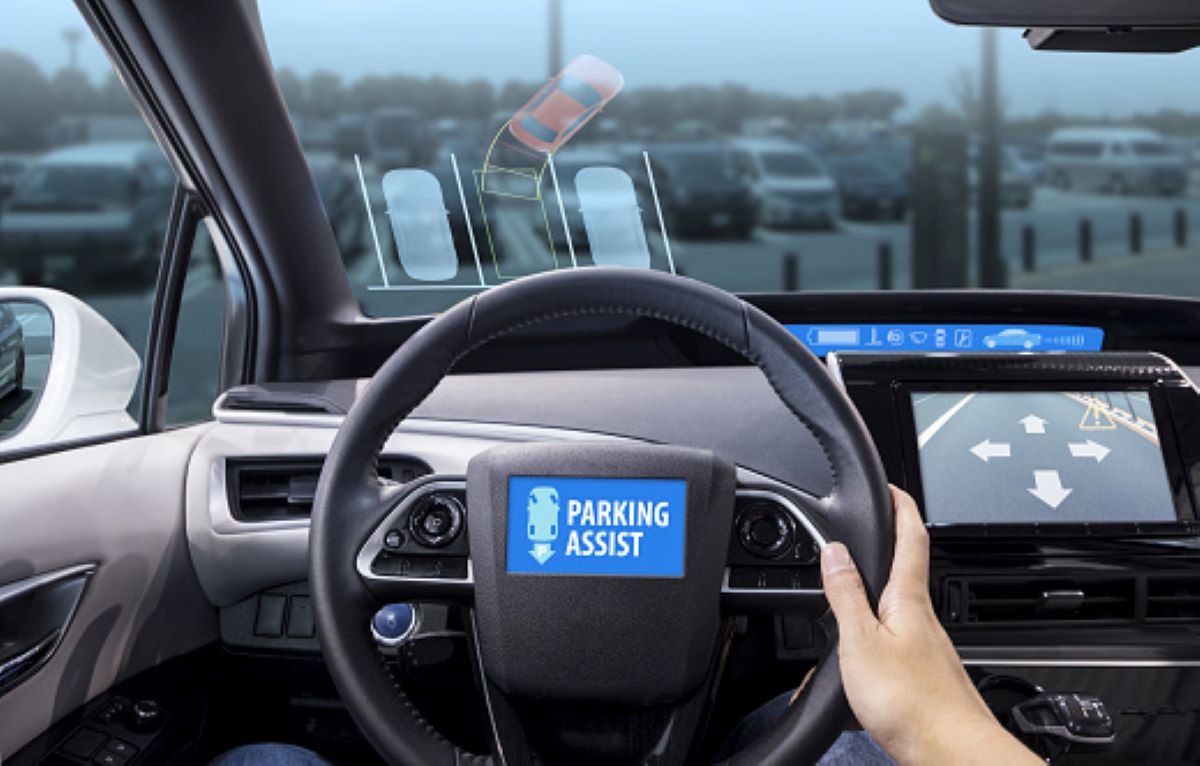
Image source: Getty
Parking assist systems (PAS) in cars consist of technology that uses space- and obstacle-detecting sensors attached to the front, side and rear of the vehicle, as well as an onboard computer, to help drivers park easily and with greater precision.
The technology eases the challenge to drivers of making S- or L-shaped maneuvers in parallel or perpendicular parking, respectively, as well as in maneuvering in tight spaces which may result in a car getting scratched or dented.
An enhanced-service park assist system helps a driver search for a parallel or perpendicular parking space and then steers the car into the space, applying brakes and shifting gears as needed. An example is the Audi parking system called “Park Assist”, which uses ultrasound technology to scan for parking space and helps park a vehicle by performing steering functions through electromechanical steering.
Some advanced parking assist systems even enable automatic parking through a smartwatch.
Sensors: Ultrasonic and electromagnetic
Typical parking sensors used for parking assist systems are ultrasonic and electromagnetic. Ultrasonic sensors emit acoustic pulses and rely on the reflection of sound waves to measure a car’s distance to objects or obstacles. These sensors are like miniature speakers, with diaphragms that vibrate due to sound waves.
Electromagnetic sensors, on the other hand, are based on radar technology and rely on the reflection of radio waves to detect obstacles.
Parking assist development through the years
Beckers’ sensors
Belgian Rudy Beckers is credited with inventing the earliest sensors that are now park assistants in cars worldwide. He filed for and obtained a patent on his invention in 1988.
VW Futura, 1989
Volkswagen introduced assisted parking in its concept car, the VW Futura with gull-wing doors, which it showcased at the 1989 Geneva International Motor Show.
The Futura had distance sensors, a navigation system, an on-board computer, a mobile phone in the center console and an electric parking brake. These innovative features enabled the concept vehicle to park autonomously, leave its parking space and keep distance from a vehicle in front of it using radar. This futuristic car, however, did not go into mass production.
Toyota Prius, 2003
Toyota was the first major car manufacturer to offer a car with park assistance technology. This was the Prius hybrid in 2003, whose key feature was dubbed “Intelligent Parking Assist” and which enabled automated parallel parking.
Other marques followed Toyota’s lead. Among these were Lexus, which added parking assistance technology in its LS model in 2006, Ford in 2009 and BMW in 2010.
PAS Mainstreaming
Current car models that feature parking assist systems include the BMW 5 Series, DS 7, Ford Fiesta, Hyundai IONIQ 5, Kia EV6, Mercedes-Benz C-Class, Peugeot 308, Renault Arkana, Vauxhall Mokka and Volkswagen Golf.
PAS, which is a component of advanced driver assistance systems, will be mainstreamed in cars in the coming years.
Increased safety awareness driving PAS growth
There is rising demand for parking assist systems due to increased awareness about the importance of vehicle safety as well as the preference of end users for more worry-free car parking. Future Market Insights (FMI) projects forecasts a “prolific” expansion at 13.8 percent CAGR for park assist systems from 2022 to 2032.
According to FMI research, China is forecast to remain a key producer as well as consumer of parking assist systems, accounting for about 67.4 percent of the East Asia PAS market in 2022. By 2032, FMI forecasts the size of the parking assist systems market to be about 9.4 million units in volume and $2.2 billion in value.
More information on quality PAS from vetted manufacturers in the Global Sources community can be found here.
Source the latest products from verified suppliers via global sourcing platform, and subscribe to our magazines for more in-depth insights and product discovery.
Join the Smart China Sourcing Facebook Group
- Connect with other buyers
- Ask questions
- Get advice from experts
The Related News
![]()
![]()
![]()
![]()
Serger vs Sewing Machine: Key Difference
2023/09/08