

-
Upload photo
Re-upload
Accepting: jpg, png. Max file size: 10 MB
Stepper Motors, Mainstream Technology in 3D Printers
From a science fiction idea to what it is today, 3D printing has come a long way and is now used in prototyping, tooling and manufacturing as well as in the fields of education, medicine, art and jewelry and construction. This far-ranging application base has grown its market, which reached $17.05 billion in 2022 and posted a 13 percent YoY increase, according to Hubs in its latest report. By the end of 2023, the industry is projected to surge by 17 percent and finish with $19.9 billion.
MarketsandMarkets forecasts an 18.1 percent CAGR between 2023 and 2028 based on estimates of $15 billion in 2023 to $34.5 billion by 2028, with the industrial market as major demand catalyst.
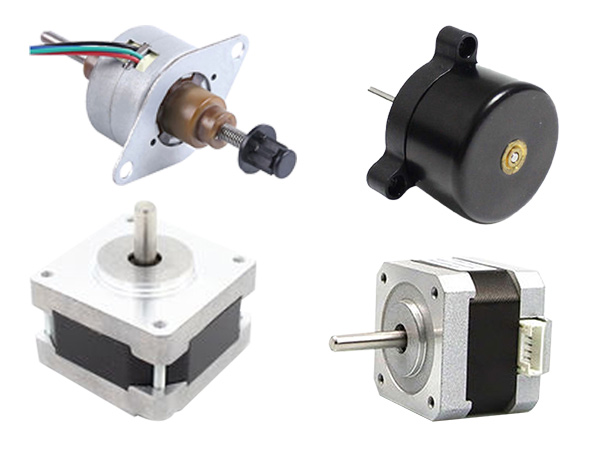
One essential component enabling this printing technology is the stepper motor, which ensures precise movement. At least four such motors are in a 3D printer, according to 3D Printscape. Based on the part or axis that they control, there are the Z motor for moving the build platform up and down, the Y motor for forward and backward, the X motor for left and right, and the extruder motor for loading the printing material.
And while servos are being presented as a better alternative in terms of torque, accuracy and finish, stepper motors remain the popular choice. One key advantage is that unlike servos, they don’t need an encoder to ensure precision, making them a cheaper solution. In addition, they employ less expensive magnets, seldom integrate gearboxes and are widely available. Stepper motors are also easier to control and have low noise and breakdown rates.
Hybrid motors
To meet the requirements of higher precision, reliability and speed, manufacturers of stepper motors are considering the hybrid configuration. This type combines the best of variable-reluctance and permanent-magnet motors, specifically the former’s smaller step sizes and the other’s high inertia capability.
When compared to servos, these hybrid motors “have the advantage of rugged, simple construction; reliability with little maintenance; high torque at low speeds; and no need for position or velocity feedback devices,” according to Machine Design.
In China, suppliers have begun introducing hybrid stepper motors for 3D printers, anticipating demand will snowball in the next few years. Guangzhou Ruibao Electrical Co. Ltd, for instance, has released a CE-approved NEMA 17 unit with 0.9-degree step angle, 75mNm holding torque and 79.5g.cm2 rotor inertia. This compact unit has a body length of 27.5mm and weight of 160g.
In addition to the global 3D printer market, Chinese stepper motor manufacturers are also targeting the domestic sector. In scale, China ranked next to the US and Germany in 2021, with an 18.6 percent share, according to the Qianzhan Industrial Research Institute. By end-2023, its 3D printing market is expected to reach $8 billion and go up further to $12 billion by 2025 based on estimates by Chinese market research company Sangpu Group. By then, China will account for 27.2 percent of the world's total.
In stepper motors, the Chinese market was $402 million in value in 2019 and will increase to $538 million in 2023, according to CNinfo. An estimated 20 to 30 percent of total shipments are for 3D printers, a share that will increase amid rising demand.
Mainstream stepper motors
For 3D printers, Chinese manufacturers have stepper motors typically measuring 42mm in length and 28, 38 and 40mm in height. These units have a 1.8-degree step angle and -20 to 70 C operating temperature. They have four to six leads, and 3.8 to 24V rated voltage and 0.4 to 1.7A rated current.
Customization is still widely practiced to cater to a wider range of requirements in sizes and other specifications.
To guarantee product quality, some companies subject stepper motors to nondestructive testing, magnetic particle, ultrasonic and liquid penetration examination, and X-ray test. Others ensure that the materials used comply with ASTM, DIN and GB standards.
Manufacturing inputs are sourced from domestic or foreign suppliers as required. Their costs are likely to stay stable in the coming months and keep stepper motor prices unchanged.
China’s multinational supplier pool
Among hundreds of manufacturers of 3D printer stepper motors in China are foreign companies. They include major international players Oriental Motor, Nidec and Schneider, with Chinese counterparts such as Moons, Zhaowei and Johnson Electric. Nidec has several factories in various locations there, including Guangzhou, Dongguan, Dalian, Changzhou and Qingdao.
Most suppliers also offer brushed, BLDC and AC motors for automotive, robotics, and medical and industrial applications.
Stepper motor, 1.8-degree step angle
Company: Changzhou Probond Motor Co. Ltd
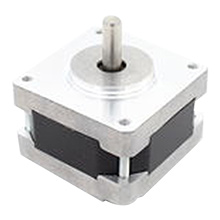
This stepper motor from Changzhou Probond, the 39BYGH-1, has a 1.8-degree step angle, and 3.52 to 14VDC rated voltage, 0.2 to 1.5A current and 2.5 to 56ohm resistance. It is surged tested to 500VAC for 1min. This 20mm-long unit has a class E insulation.
MOQ: 100 units
Lead time: 15 days
Stepper motor, 15-degree±5 percent step angle
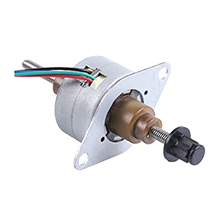
Company: Guangzhou Ruibao Electrical Co. Ltd
Guangzhou Ruibao’s 25PM30001-01 stepper motor, with a 15-degree±5 percent step angle, is rated at 1.73V, 0.25A. It has 7.6ohm±10 percent resistance, 3.5mH±20 percent inductance, 100Mohm minimum insulation resistance at 500VDC, 600VAC dielectric strength at 50Hz, 1mA/sec and -20 to 50 C operating temperature.
MOQ: Negotiable
Lead time: 10 days
Stepper motor, 56.6 to 249.3g.cm torque
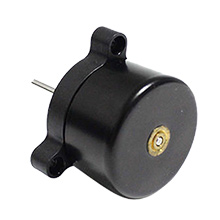
Company: Shenzhen Hongfei Electrical Technology Co. Ltd
Rated at 24V, 0.048 to 0.163A, the HM-40 stepper motor from Shenzhen Hongfei has 2,080 to 4,160rpm speed, 56.6 to 249.3g.cm torque and 47.6 percent efficiency. It has a diameter of 40mm.
MOQ: 1,000 units
Lead time: 7 days
Stepper motor, 1.58 to 5.5kg.cm holding torque
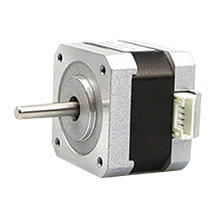
Company: ZJTEX Electric Group Co. Ltd
Model ZJ-42HM stepper motor from ZJTEX has a step angle of 1.8 degrees. The current rating is 0.3 to 1.68A, minimum insulation resistance 100Mohms, holding torque 1.58 to 5.5kg.cm and operating temperature -20 to 50 C. At maximum, the radial force is 28N and the axial force 10N.
MOQ: 500 units
Lead time: 30 days
Source the latest products from verified suppliers via global sourcing platform, and subscribe to our magazines for more in-depth insights and product discovery.
Join the Smart China Sourcing Facebook Group
- Connect with other buyers
- Ask questions
- Get advice from experts
The Related News
![]()
![]()
![]()
![]()
Serger vs Sewing Machine: Key Difference
2023/09/08