

-
Upload photo
Re-upload
Accepting: jpg, png. Max file size: 10 MB
Marine radios: Safety at sea
by Cecile de Veyra (Managing Editor)
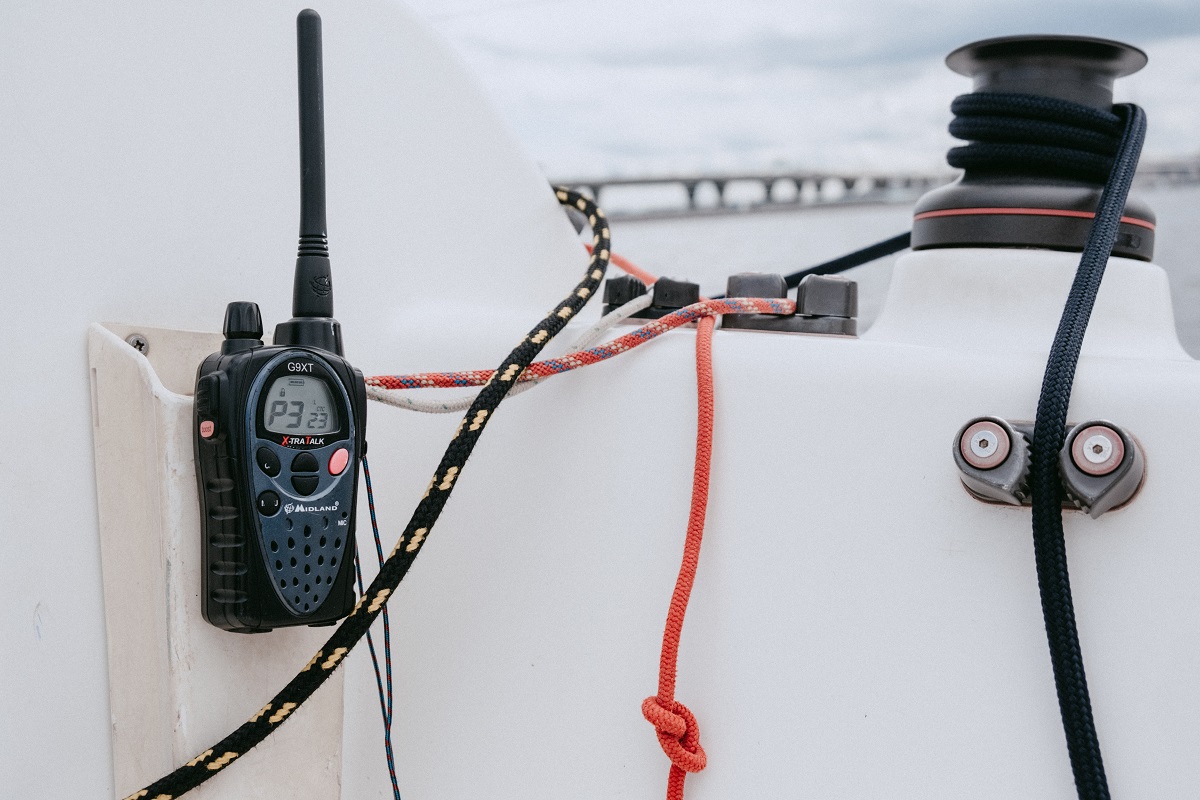
Image from Pexels
A must-have item of equipment regardless of vessel size, shape, use or regulation, marine radios are a lifeline in any emergency at sea. They offer the basic functionality of communication between ships, land-based stations and the coast guard, and have acquired many add-on safety features over years of development.
Before the use of radio technology, semaphore flags and flashing lights were used, but this method worked only within range of a telescope. With the invention of the Morse code and its use in telegraphy, longer distance was achieved. However, back then, radio equipment installed in ships, especially cruise liners, were a premium service provided to well-off passengers monitoring their stocks or businesses. Their importance for maritime safety was highlighted only after the rescue of passengers and crew from the sinking luxury cruise ship RMS Republic in 1909 and the RMS Titanic disaster in 1912.
From Morse code to voice communication
Today’s marine radios offer instant voice communication, having transitioned from the Morse code to the Global Maritime Distress and Safety System (GMDSS) in 1999. The International Maritime Organization cited the training and practice needed to use it and said, “If something happened to the radio operator, it was unlikely that anyone else on board would be able to use the telegraphy equipment.”
Further, modern-day boat radios operate on VHF and have channels designated for specific communication, such as channel 16 on the 156.8MHz exclusively for distress, emergency and safety, and channel 70 for DSC distress alerts, and urgency, safety and routine calls only. They can also receive weather forecasts and updates and have a digital selective calling (DSC) feature or capability to automatically send out a distress signal when the panic button is hit. DSC also allows transfer of information, including the vessel’s identification number and position, and the purpose of the call.
Added safety features
On commercial vessels, specifically those with 300 gross tonnage and above on international voyages, cargo ships of at least 500 gross tonnage and all types of passenger ships, an automatic identification system (AIS) is required. Primarily used to prevent collisions, such devices also help track a fleet of ships. There are stand-alone AIS transponders as well as marine radios that integrate this safety feature for all-in-one functionality.
Other safety enhancements include man-overboard (MOB), foghorn and wailer functions. Some handheld units include a built-in flashlight and compass as well. As for technology perks, USB ports and Bluetooth or Wi-Fi connectivity that allows audio streaming can be found in many models.
It is worthy to note that marine radios have more rugged features than land-based devices. They are built to withstand harsh conditions such as rain, splashes, saltwater and sun exposure.
Fixed mount marine radios
Fixed-mount radios deliver power of 1 to 25W and while they need a separate antenna, the trade-off is a maximum range of about 60 nautical miles. They have DSC capability, which also enables non-emergency communication with other vessels. These devices source power from the ship’s battery, ensuring almost unlimited operating time.
Depending on the available space on board, there are dash-mount types consisting of a base station and a corded microphone, and hideaway variants with a handpiece or a remote speaker microphone that has all the controls on it.
Handheld marine radios
Handheld marine radios offer the advantages of being compact and lightweight enough to be taken anywhere on board, but have a short range compared to their fixed-mount counterparts and an operating time limited by battery life. However, there are options that compensate for these drawbacks such as rechargeable radios that can also run on disposable batteries.
One other benefit of portable radios is in situations where the user is separated from the vessel. They can provide a more accurate location from built-in GPS and DSC functions.
In addition, there are handheld units that float if they fall in the water, with some having water-activated strobes for easy spotting and retrieval in the dark.
Whether used as backup for fixed-mount radios or as stand-alone communication equipment, there are features-packed handhelds available on the market.
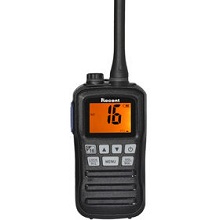
IPX7 floating handheld marine radio
Company: Quanzhou Risen Electronics Co. Ltd
Quanzhou Risen offers the model RS-25M Marine Radio, an IPX7-rated unit that floats and can withstand submersion at 1m depth for 30 minutes. This handheld device has selectable 1 and 3W transmit power, 200 programmable channels and access to 10 NOAA Weather Radio channels. It has scan, dual- and tri-watch, call channel, quick channel selection, favorite channel and battery save functions. This unit has an optional audio alarm that activates when it falls in the water and a water draining function. It can be recharged using bundled 12VDC and 100 to 240VAC chargers, but also works using standard AAA batteries. Dimensions are 63x119x35mm and weight is 136g. Price is $47. An order of one set is accepted and can be shipped in three to 25 days.
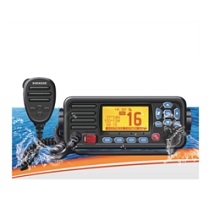
Fixed-mount marine radio with 4dBi antenna
Company: Fujian Shengda Communication Co. Ltd
Model MRFRADIO from Fujian Shengda has a stainless steel and fiberglass antenna with 4dBi gain, 50ohm impedance and 180kph wind resistance. The 1kg antenna has SO-239 cable connectors. This fixed-mount VHF radio operates on the 156 to 163MHz frequency range. It has an IPX7 rating. Operating temperature is -50 to 80 C. Price ranges from $85 to $110, depending on the order quantity. An order for one unit is accepted and has lead time of seven to 15 days.
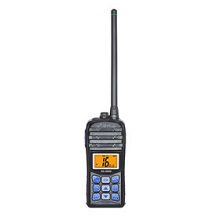
Floating handheld marine radio, drains water
Company: Quanzhou Leader Gifts Co. Ltd
Quanzhou Leader’s YJT 35ME-3-8935 marine radio has a 156 to 161.45MHz transmitter, 156 to 163.425MHz receiver and 50ohm antenna. It sources power from a 1,200mAh Li-ion battery. This IPX7 unit, with 70 programmable channels, has dual- and tri-watch, call channel, auto-scan, quick and favorite channel, and water draining functions. It is explosion-resistant and floats when dropped in the water. This 7.4VDC device measures 63x146x43mm without the antenna and weighs 282g. An order of at least two units is required. Lead time is two to 10 days.
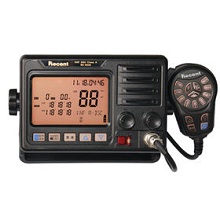
Built-in DSC in submersible fixed-mount marine radio
Company: Quanzhou Risen Electronics Co. Ltd
A VHF submersible unit, model RS-506M VHF Marine Radio from Quanzhou Risen has built-in DSC capability, 64-waypoint memory and navigation function, access to 10 weather channels, and can receive weather alerts. It is capable of distress, individual and group calls and auto-recording messages, and includes a collision avoidance alarm. This compact unit also has an 88 to 108MHz FM receiver, while GPS function is optional. Price is available on inquiry. MOQ is one unit and lead time three to 30 days.
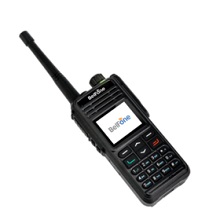
IP68 two-way marine radio
Company: Fujian BelFone Communications Technology Co. Ltd
Fujian BelFone’s VHF/UHF two-way marine radio cum telephone, model BF-TD930Ex-8975, operates on 350 to 400MHz or 400 to 480MHz frequency range and has 1,024-channel capacity. It supports DMR conventional and trunking, analog conventional and other popular communication systems. This IP68-rated device meets the testing requirements of the national military standard, the American Standard MIL-STD-810G, and has passed the gas explosion-proof certification of ex ib IIB T4 Gb and the dust explosion-proof certification of ex ibD 21 T130. It has CE approval. Price is $350 to $403, depending on the order quantity. MOQ is five units and lead time five to 30 days.
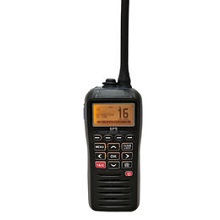
Handheld marine radio with built-in GSP, DSC, MOB
Company: Vitai Electronics Co. Ltd
Vitai offers the VT1-39M, an IPX7-rated VHF marine radio with built-in GSP, DSC and MOB functions. This unit floats when dropped in the water, and has dual- and tri-watch, water draining, and quick and favorite channel selection functions. Its power output is 5W. An order of one unit is accepted and can be shipped in five to 10 days.
Source the latest products from verified suppliers via global sourcing platform, and subscribe to our magazines for more in-depth insights and product discovery.
Join the Smart China Sourcing Facebook Group
- Connect with other buyers
- Ask questions
- Get advice from experts
The Related News
![]()
![]()
![]()
![]()
Serger vs Sewing Machine: Key Difference
2023/09/08