

-
Upload photo
Re-upload
Accepting: jpg, png. Max file size: 10 MB
Magnesium-ion Batteries: Lithium Technology's Replacement?
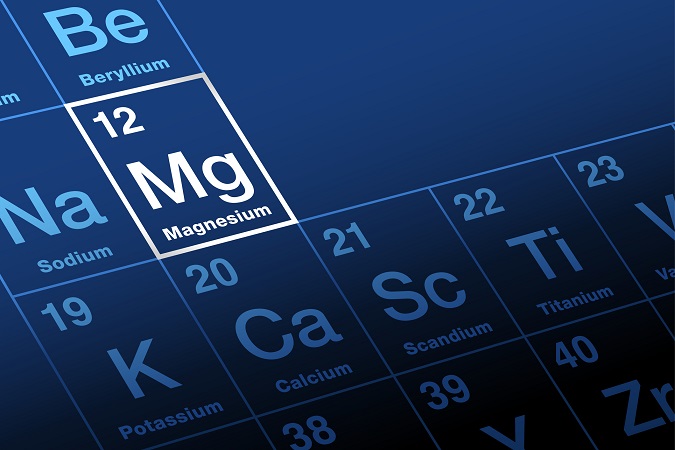
Image source: Getty
An environmentally friendly, efficient technology powering mobile devices and instrumental in making electric vehicles (EVs) mainstream, lithium batteries have been the indisputable energy storage solution since their commercialization in 1991. They have also become the choice in renewable energy storage.
But as applications multiply and demand for greater energy density increases, experts predict that lithium technology is approaching its limits in terms of achievable battery capacity as well as resource availability. Based on estimates made by the Lowy Institute, lithium reserves worldwide could be exhausted by 2030 solely due to use in EVs.
A much sought after commodity, lithium has been referred to as “white gold” because of its color and role in the effort to decarbonize toward a green future. This high demand may potentially lead to supply chain challenges over the next few years. While this metal is geologically abundant, “its production is concentrated in just a few countries,” wrote Teddy Ostrow in an article for DW.
For one, extracting it is costly because it requires equipment, skilled workers and huge amounts of water and energy. This also translates to an environmental cost, from the resources used and tailings that can pollute air and water. In addition, “mining lithium can disrupt wildlife habitats and cause soil erosion, leading to long-term ecological damage,” said Malcolm Earnshaw-Osler in an article on Borrum Energy Solutions’ website.
Magnesium-ion
In addition to challenges in processing, there is a safety issue with lithium batteries, especially in high-temperature applications such as EVs. Li-ion batteries have been observed developing dendrites that can lead to short circuits, causing heating, violet reaction with the electrolyte and battery explosion. Such anomalies are not present in magnesium-ion batteries, plus there is the extra benefit of an abundant supply of this metal component.
Magnesium-ion is therefore being considered as a successor to monovalent lithium-ion, with zinc-ion and aluminum-ion being the other two multivalents also being explored. But it is magnesium-ion that has drawn the most interest, with the first such battery reported in 2000, according to an article on Frontiers, a research publisher and open science platform.
Progress in this sphere, however, seems to have stalled until it was restarted with vigor in recent years, driven by the trend for EVs and renewable power systems.
Under the Horizon 2020 initiative, the EU started funding new research on breakthrough technologies. The program includes the European Magnesium Interactive Battery Community (E-Magic) project, which involved Cambridge University, engineering colleges in Denmark and Israel, and German and Spanish research organizations. It will receive an allocation of $7.1 million or EUR 6.5 million.
Meanwhile, in the US, a new magnesium-ion battery was developed by researchers at the Toyota Research Institute of North America and the University of Houston, the same report said.
In Japan, a professor at the Tokyo Metropolitan University, came up with a battery that uses manganese oxide and magnesium metal respectively as positive and negative electrodes, according to Takuro Kusashio in an article for Nikkei Asia.
The Korea Advanced Institute of Science and Technology’s research team had a breakthrough in a chemical process that could enhance the performance of magnesium batteries, as reported by the National Research Council of Science & Technology on TechExplore.
Universities, research institutes and companies in China have also been working on magnesium-ion batteries in recent years. There is the National Engineering Research Center for Magnesium Alloys that has put together the largest research team in the country. It has developed magnesium batteries with a high hydrogen storage density of 6.1 weight percent, as well as magnesium sulfur batteries with an energy density as high as 785Wh/kg beating LiFePO4 batteries, which have 160Wh/kg.
Toward industrialization
To fast-track magnesium-ion battery development and push it toward industrialization, projects have been launched as solo undertakings or as partnerships between manufacturers and research institutes.
One of the earliest success stories is Furukawa Denchi’s magnesium air battery called MgBox, which was developed and launched in 2014 and sold in 2016. The product, conceptualized after the Great East Japan Earthquake in 2011, is designed for emergencies. Furukawa Denchi is currently working with several companies and research institutes to introduce 300W magnesium batteries for smartphones and 3,000W versions for household use within the next five years, according to an article on Yiche, a Chinese automotive information site.
The Saitama Prefectural Industrial Technology Center, in partnership with Honda, announced a 2018 commercialization date for their magnesium battery for smartphones and other portable devices. However, there is no available information that this pushed through.
In China, the RSM Group, a top magnesium alloy manufacturer in China, has a cooperation with ChongQing University on the development and industrialization of magnesium hydrogen storage batteries. The company is eyeing entry to the rechargeable magnesium and magnesium air battery segments as well soon.
The Chongqing New Energy Storage Materials and Preparation Research Institute was established in 2022 to undertake a magnesium battery project in Qingyang, Anhui province. The goal is to develop and industrialize such batteries for electric bicycles, streetlights, energy storage systems and other applications. The research center is said to have started trial production of e-bike batteries in cooperation with local enterprises.
Another undertaking is the setting up of a magnesium hydrogen storage research center and industrialization base in the Guangdong-Hong Kong-Macao Greater Bay Area. Announced by Guangdong GuoYan Science & Technology Research Center, Chongqing University and Guangdong Academy of Sciences in 2020, the project has a total investment of $71.42 million and will handle trial production of magnesium batteries and magnesium hydrogen storage batteries.
Xi’an Zhongke New Energy Science & Technology, meanwhile, is investing in a three-phase magnesium battery project. It will allocate $170 million for the first phase, which will turn out magnesium battery packs with an annual production value of $4.28 billion, and $7.14 billion for the next phase. The last phase will mainly entail the manufacturing of magnesium batteries for EVs and has an expected production value of $14.28 billion.
Lucrative rechargeable battery market
Globally, the rechargeable battery market will be on the scale of more than $500 billion by 2025, according to Chongqing Daily. The report also said that magnesium batteries would account for over 30 percent, driven mainly by increasing demand from the EV, energy storage, mobile electronics and wearables spheres.
In the meantime, lithium batteries will continue to dominate this sector and achieve rising global shipments, with 2,211.8 and 6,080.4GWh projected for 2025 and 2030 from 957.7GWh in 2022, according to Chinese research firm EVTank.
Veritable trove
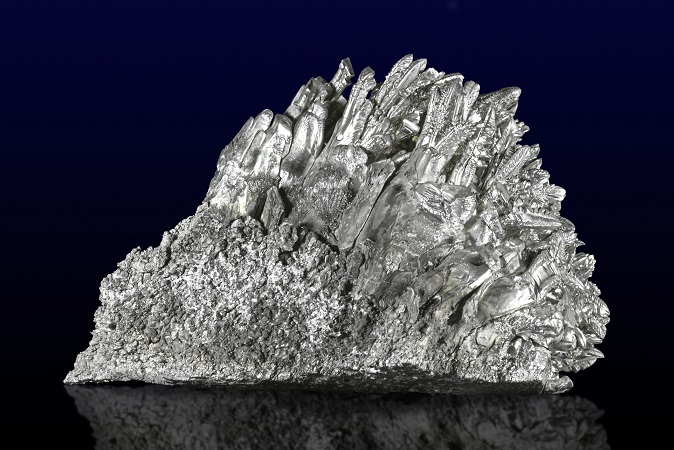
Magnesium metal is found all over the
planet, in magnesite, dolomite, carnallite,
sea water and lake brines.
Magnesium metal is found all over the planet, in magnesite, dolomite, carnallite, sea water and lake brines, with the last two being the largest resources. Most of what’s used in magnesium production worldwide come from minerals such as magnesite and dolomite, according to Geoscience Australia. “When pure, magnesite contains 47.8 percent magnesium oxide and 52.2 percent carbon dioxide.”
China is the world’s largest magnesium material production base, turning out 17 million metric tons in 2022, based on M. Garside’s report published on Statista. It is followed by Australia, which had an estimated volume of 2.6 million metric tons.
China’s reserves of dolomite exceed 20 billion tons and are found in the provinces of Shanxi, Ningxia, Henan, Jilin, Qinghai and Guizhou, according to VZKoo, a specialized market research company in the country.
The country also has abundant sources of magnesite and accounts for about 63 percent of worldwide output. Its annual mine production is 17 million metric tons.
Globally, magnesite resources stand at 13 billion metric tons, as estimated by the US Geological Survey.
Source the latest products from verified suppliers via global sourcing platform, and subscribe to our magazines for more in-depth insights and product discovery.
Join the Smart China Sourcing Facebook Group
- Connect with other buyers
- Ask questions
- Get advice from experts
The Related News
![]()
![]()
![]()
![]()
Serger vs Sewing Machine: Key Difference
2023/09/08