
-
Upload photo
Re-upload
Accepting: jpg, png. Max file size: 10 MB
Issues you must know for sourcing in Jiangsu
by Stef Calimlim (Content Editor)
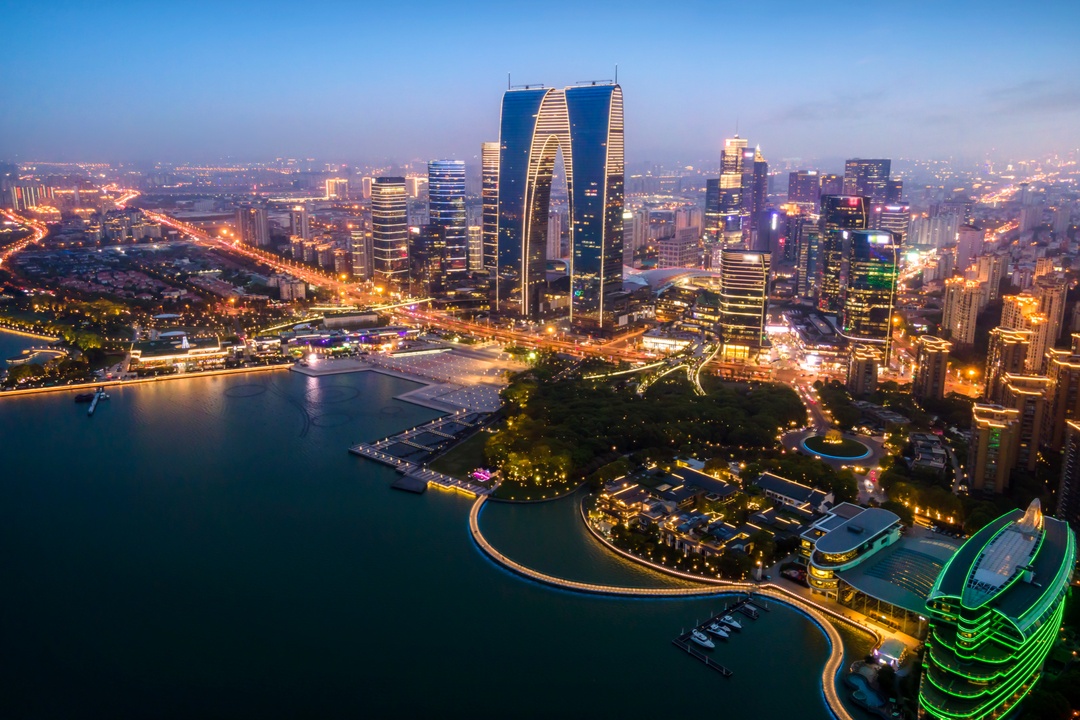
Image source: Getty
Located in the middle of China’s east coast is one of the most dynamic Chinese provinces, with a highly developed transport and communication system – Jiangsu. As one of China’s major industrial hubs and economic powerhouses, it accounts for about 10.2 percent of the country’s Gross Domestic Product, ranking second to Guangdong in 2021.
Jiangsu has a robust trade infrastructure and ecosystem that makes it an excellent sourcing destination. Its pillar industries include electronics, machinery, equipment, telecommunications, textiles and garments, chemicals and metallurgy. The province has 46 national-level and 112 provincial-level development zones, according to the China Jiangsu Provincial Economic and Trade Office in Europe. Moreover, it houses one of the six pilot free trade zones approved by the State Council, the China (Jiangsu) Pilot Free Trade Zone (JSFTZ), which is aimed at promoting industrial transformation and building an open economy. Under the JSFTZ are the Nanjing Area, which is a pilot district for independent innovation and opening-up and international cooperation, the Suzhou Area, a world-class high-tech zone, and the Lianyungang Area, the key transport hub.
Sourcing from Jiangsu provides a lot of advantages and business benefits, yet, like in any other market, it is imperative for buyers and sourcing professionals to also look into possible issues or challenges they may face when sourcing. Not all markets are created equal and no market is perfect, after all. Here are some variables that buyers should take into account when sourcing in Jiangsu:
Industry specializations of cities, districts
Jiangsu has a lot of industrial zones that have various specializations. The question is, as a buyer, do you know where to find the suppliers that are right for your business? While navigating Jiangsu, geographically speaking, is no longer a challenge because of the technologies in place, it takes time to familiarize which area specializes in which products.
Nanjing
Nanjing, the capital of Jiangsu Province, with a total area of 6,587.02 square kilometers, is an important scientific research and education base, and one of China’s major transportation hubs. Nanjing is well known for its mature industry cluster in fashion apparel, machinery, and hardware. It is the only megacity in the Yangtze River Delta and is an important gateway for the development of the central and western regions. In 2021, Nanjing's total foreign trade volume of imports and exports reached US$98.528 billion.
Suzhou
Suzhou, with a total area of 8657.32 square kilometers. Suzhou has been called a paradise on earth, and has Shanghai to the east, Zhejiang to the south, Lake Tai to the west and the Yangtze River to the north. Suzhou has constructed a modern industrial system to support the development of the fabric, fashion apparel and printing & packaging industries. It is one of the most important central cities in the Yangtze River Delta, the national high-tech industrial base, and a scenic tourist city. In 2021, Suzhou’s total import and export volume of goods was RMB2,533.20 billion.
Wuxi
Wuxi, with a total area of 4,627.47 square kilometers, is one of the central cities in the Yangtze River Delta and a major tourist destination. It is home to a cluster of Machinery, Fabric and Textile companies. A nationally renowned historical and cultural city, Wuxi is known as "cloth wharf, money wharf, kiln wharf, silk city and rice market." In 2021, Wuxi's total foreign trade volume of imports and exports reached US$105.70 billion.
Changzhou
Changzhou, with a total area of 4,385 square kilometers, is one of the birthplaces of modern China’s industry and commerce, and was part of the origins of the Southern Jiangsu mode. Changzhou has built up a competitive advantage in building materials, auto parts, and textiles. Changzhou is a major in Chinese culture dating back more than 3,200 years and is one of China’s outstanding tourism locations, offering beautiful scenery and numerous historical sites. In 2021, Changzhou's total foreign trade volume of imports and exports reached RMB301.78 billion.
Nantong
Nantong has a total land area of 8,001 square kilometers and a sea area of 8,701 square kilometers. It is the economic center and modern port city on the north bank of the Yangtze River Delta, combining the advantages of coast and waterway. Nantong has ranked highly in evaluations of the sports, apparel and fabric industries in China for many years. As it is located to the north of Shanghai, it is sometimes known as North Shanghai. In 2021, Nantong's total foreign trade volume of imports and exports reached US$52.712 billion.
Xuzhou
Xuzhou has a total area of 11,258 square kilometers. It is a nationally important historical and cultural city, a major transportation hub, the central city of the Huaihai Economic Zone, and one of the top 30 cities in China's economy. Xuzhou is an important headstream for the international machinery, hardware and auto parts industries.As an international new energy base, It is also known as China's construction machinery capital and world silicon capital. In 2021, Xuzhou's total foreign trade volume of imports and exports reached RMB125.423 billion.
Logistics & local transportation
As eastern China’s transportation hub, Jiangsu has a vast network of modern air, waterway, rail and highway transportation. With shipping as the most important and economical means of transportation in importing and exporting, Jiangsu is a preferred destination both by buyers, marketers and other business professionals because of its accessibility and convenient transport systems. However, certain disruptions and unprecedented global economic challenges are also impacting Jiangsu’s transportation system and logistics infrastructures. Transit schedules and frequencies, as well as shipping, freight and container costs are affected. With these in mind, buyers may consider signing short- or long-term supply agreements with suppliers, availing themselves of charter ship services negotiating with shipping companies directly.
Taxes, product costs & regulation hurdles
Will product prices be affected by the increase in production costs, or tariffs or taxes charged upon the supplier because of the current economic challenges? There have been news reports that some factories in Jiangsu had increased tariffs due to using outdated equipment or missing their energy efficiency goals. In general, what Chinese Customs regulations should buyers know before sourcing in the country?
The government enforces strict regulatory systems for those in the chemical industry, and those engaged in the use and disposal of electroplating, agrochemical, lead-acid battery, steel and hazardous products and wastes. How will choosing between compliant and non-compliant suppliers affect product quality, and how will this affect the businesses of buyers? After all, buyers also have the ethical responsibility to their customers.
Meanwhile, free trade agreements such as the Regional Comprehensive Economic Partnership (RCEP), which was entered into force in January 2022, are set to reduce or eliminate tariffs and allow companies to ship products between RCEP countries, including key member China, easily and make raw materials less costly, without worrying about specific rules of origin. The RCEP is also expected to improve market access for goods and services and reduce the cost of overseas logistics. In China, RCEP certificates of origin are being issued to manufacturers to encourage them to take advantage of reduced tariffs when exporting goods. This in turn proves beneficial to buyers transacting with such Chinese suppliers as goods are sold at lower rates and logistics costs are reduced.
Raw materials, imported components
Is Jiangsu self-sufficient in providing all the raw materials required by the buyer? If not, can suppliers easily procure the needed materials and are the prices competitive? Would importing components have an impact on the product quality, increase product costs or prolong the production process? These are also points worth considering among buyers.
Join the Jiangsu Online Show
In conclusion, Jiangsu offers vast sourcing opportunities for buyers with its vibrant industrial sectors, wide array of specializations and reliable transportation system. Buyers are assured not just of the product quality but also of the quality of doing business with Jiangsu suppliers. By keeping in mind the abovementioned sourcing issues, buyers can enjoy a worry-free and seamless sourcing experience.
Be a part of Global Sources’ Jiangsu Online Show and find high-quality products at competitive prices, exclusively from verified Jiangsu suppliers. Source top-rated electronic components and products, home and kitchen essentials, hardware and auto parts, fashion apparel and accessories, and industrial and machinery must-haves.
Also Read
Jiangsu’s major industries: Strengths and uniqueness
China’s new sourcing hub: Jiangsu macroeconomic advantages in sourcing
How does Jiangsu government support a green economy
Source the latest products from verified suppliers via global sourcing platform, and subscribe to our magazines for more in-depth insights and product discovery.
Join the Smart China Sourcing Facebook Group
- Connect with other buyers
- Ask questions
- Get advice from experts